
Black Sun – A murmuration of starlings
A murmuration of starlings is an amazing sight. It is the most famous natural spectacle in Denmark.

Black Sun – Starlings in Denmark. This photo is from Ribe on the west coast of Denmark. You see the towers of Ribe Cathedral in the background
In spring and autumn huge numbers of migration starlings land in the marshes at the Wadden Sea. They are looking for daddy long legs and garden chafer grubs in the wet meadows. At such time you can observe a fascinating panorama called “Black Sun” (Sort Sol).
Hundreds of thousands of starlings (Common starling = Sturnus vulgaris) turn the sky black when they are circling around creating fascinating formations in the air before they land at dusk in an area covered with reeds. Several starlings descend on the same reed – the uppermost in danger of being caught by a bird of prey, while the lower ones might end with their feet in water.

Black Sun. When starlings migrate during spring and autumn you see Denmark’s most famous natural spectacle “Black Sun”. When the weather is warm the starlings stay a little longer. This photo was taken in Ribe in early November
Some evenings the starlings are especially active “air dancing” – making rapid changes of direction and flying around the air before they decide where to settle for the night. This is due to birds of prey nearby – goshawks, falcons or common buzzards. The birds of prey do usually catch many starlings during the air show and the starlings will all start to fly together, trying to scare the birds of prey away by flying towards them or trying to come above them to make a counter attack with vomit and bird droppings which make the birds’ feathers sticky so that they can’t fly.
Other evenings no birds of prey are nearby. Then the starlings make no “air dances” but descend directly in the reeds.
Often the starlings will change their sleeping locations, as they try to trick the birds of prey. Besides the reeds often break because of the heavy weight of the amount of birds. You can’t quite be sure where the starlings choose to stay for the night.
Here you can see a little of the video “Black Sun Ribe” filmed by Danhostel Ribe 1 km from the hostel.
What time of the year is best to see Black Sun?
The Black Sun period in the spring is shorter than in autumn. In general, the spring migration occurs from February to mid-April, and autumn migration begins in August and can last all the way to December. The largest black sun experiences will usually be in late March and early April and again in September and October. Mid-October will usually give you the most breathtaking experiences in autumn. In recent years there has still been impressive Black Sun around the1st of November in Ribe.
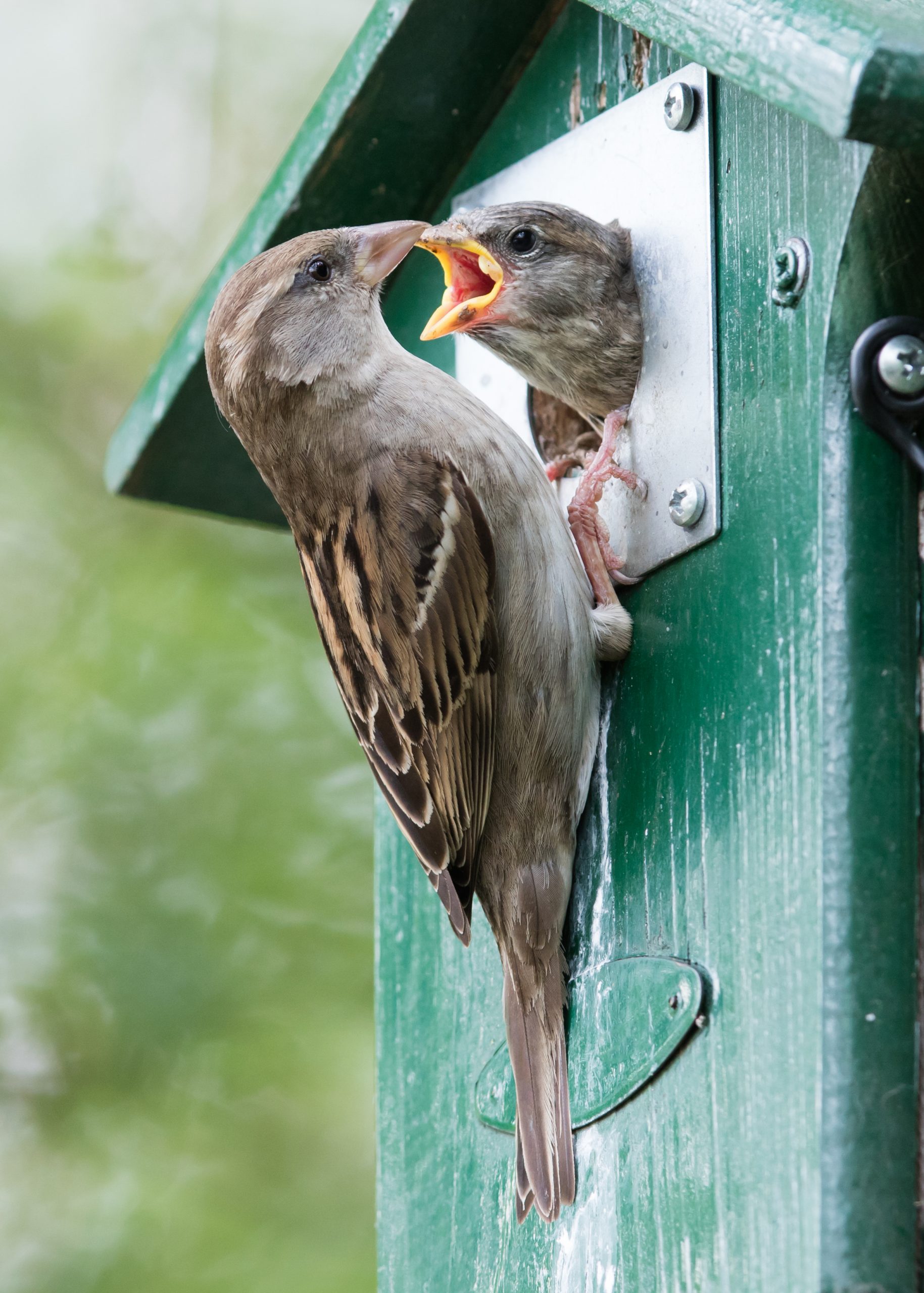
A starling feeding its nest box nestling in the hostel host’s garden. Next day the nestlings left the nest to learn to survive on their own before the autumn “Black Sun”
The migration across the North Sea to the winter quarters in England takes a single night, but to be able to cross the North Sea the starlings must have achieved a weight of 90 grams – otherwise they will not survive
Where to see Black Sun Starlings in Ribe
Many evenings you can watch the starlings dance from the bird watchtower at Ribelund (around 1 km. from Danhostel Ribe). Take an evening stroll through the park of Ribelund and watch all the animals – deer, kangaroos, goats, horses, donkeys etc. From the watchtower you may then enjoy the beautiful view of Ribe Østerå and the marshes of Ribe. Enjoy the tranquillity and the sunset above Ribe Cathedral. Please don’t disturb the birds by photographing with flash, though.
Other evenings the most magnificent sights have been near Tangeskoven or Kammerslusen. You may spend the day at the Wadden Sea with a visit to the Ribe Dyke and to the Wadden Sea island Mandø.


Black Sun guided Tours
You can join “Black Sun” excursions with experienced guides from the Wadden Sea Centre. The guided tours take place around sunset. Notice that the local tour guides sometimes call the tours “Starling Magic”. Please book your tickets early to avoid disappointment as these tours are frequently full: Book tickets WaddenSea Tours. Or find the link here: Museums and Activity Centres
Guided tours in Ribe and the Wadden Sea National Park are normally in March and April in spring and in September and October in autumn
Starlings have become a problem to dairy farmers as they eat of the cattle feed, especially they like the maize grains – which also is a key energy provider in cattle feed.
Black Sun accommodation
Black Sun is usually not far from Danhostel Ribe – most of the days no longer than you can either walk or cycle – but we are usually very busy in the Black Sun season – especially in the fall – so remember to book your room. See: Accommodation.

Other bird migrations are also spectacular
Wadden Sea National Park Click the link and take a look of the photo of the sandpipers giving a fantastic flying display – and the geese too. With 10 to 12 million migratory birds spring and autumn in the Wadden Sea National Park, it is a top bird-watching location in Denmark
Most birds are to be seen in the Wadden Sea National Park during migration in spring and autumn. But during winter it is also possible to see big flocks of geese and swans
