
The Wadden Sea – the tidal wetlands along the North Sea – is Denmark’s biggest National Park. It is inscribed on the UNESCO’s World Heritage list – like the Wadden Sea in Germany and the Nederlands.
In the Wadden Sea National Park the horizon is wide and the sky goes on forever, while the colors shift between all the colors of the rainbow, depending on the seasons and the weather. A unique wildlife adventure year-round.
National Park and UNESCO Wadden Sea World Heritage
From the Ribe Dike at the Danish Wadden Sea Coast outside Ribe the view reaches out to both Esbjerg as well as all the Danish Wadden Sea islands, Fano (Fanø), Mando (Mandø) and Romo (Rømø).
The Wadden Sea has global significance as one of the world’s 10 most important wetlands. Tidal wetlands, like the Wadden Sea, are some of the most productive ecosystems known. Plant materials, myriads of animals and micro-organisms in the sediments of the Wadden Sea make the area to one of the largest feeding grounds for migratory birds.
The total Wadden Sea National Park in Denmark, Germany and the Nederlands covers an area of 13,500 km² (5212.4mi²). The Danish’s portion of the Wadden Sea is 1,200 km² (463.32mi²) and was classified as a National Park in 2010
Please note that only the part of the Wadden Sea National Park which is situated outside the dikes is UNESCO World Heritage in Denmark (in places with no dike the World Heritage will stop at the point of highest daily water level). The Wadden Sea islands Fano, Mando and Romo are part of the World Heritage, but the Tønder Marsh, the Ribe Marsh and the meadow outside Danhostel Ribe (Hovedengen) are part of the Wadden Sea National Park, but not part of the UNESCO World Heritage. However, there is one exception to this rule – namely Margrethe Kog, located inside the dike at Højer, it is also part of the UNESCO Wadden Sea World Heritage.
NB! Don’t walk too far out on the tidal flats unless you are very familiar with the tides, for at high tide the water rises above your head unless you are more than 2 meters tall. Join a guided tour with a professional guide instead.

Read more about the UNESCO WADDEN SEA World Heritage on their homepage: Wadden Sea World Heritage
Book a guided tour in the Wadden Sea
Tours close to Ribe range from oyster safari, seal safari, “Black Sun” – Starling Murmurations, to tide tours exploring the low water and the dry mudflats, walks over the sea bed to the Wadden Sea island Mandø, and The Sea Explorer tours for all the Family.
Please be aware that Black Sun and other migration bird tours are during spring and autumn. Oyster tours are only available from October to April, etc.
Book your UNESCO World Heritage Wadden Sea guided tour from the Vadehavscentret ved Ribe (Wadden Sea Centre): Book guided tour tickets. The Wadden Sea Centre arranges a range of public walking tours and group tours in the National Park – they also arrange special guided tours and walks for kids.
Budget eco accommodation in the Danish Wadden Sea National Park
If you’re looking for sustainable budget accommodation in the Wadden Sea National Park, you should opt for our hostel. Danhostel Ribe is the only accommodation in the Danish part of the Wadden Sea National Park with an official ecolabel, see Green Key. Danhostel Ribe is situated in the middle of the National Park (north/south). Our guests can walk directly from the hostel into the Wadden Sea National Park, as the protected meadow outside our door is the only part of Ribe, which is National Park. The hostel is also official National Park partner.
Our National Park view varies by season. Sometimes when the meadow is completely flooded we have “sea view”. The meadow is called Meadow of the Heads (Hovedengen). Read here the macabre story of how it got its name: Beheaded pirates.

Bicycle Excursions
A great way to experience the magic of the salt marsh and the tidal flats is by bicycling through it. Get a free cycle map at the reception desk and bike from Ribe, through the Ribe marsh, to Ribe Pound Lock (Kammerslusen), along the Ribe Dike and the Wadden Sea, to the 2 ebb-roads over the seabed in Vester Vedsted and back to Ribe. About 25km. Nothing disturbs the silence – except for the chirping of birds and the wind singing through the flat landscape and the reed-beds. This is a unique nature experience at any time of year.
In summer time sitting on the dike facing the sea will relax your mind and let all thoughts disappear from your consciousness – in spring and autumn in addition to this you’ll see huge flocks of migration birds. Stay till sunset, the setting sun will often cast the most beautiful light over the North Sea and the Wadden Sea.
If you don’t own a bike why not hire one at the hostel? : Rent a bicycle
Birdwatching – Migratory birds like Black Sun – Starling Murmurations
Birdwatching is a popular activity in the national park. Particularly in spring and autumn when millions of birds are passing through the area creating breathtaking displays.
The starling migration is the most famous nature experience in Denmark. We call this natural phenomenon “Black Sun” because thousands of starlings cover the sun, so that it cannot be seen. Read more and book tickets: Black Sun.
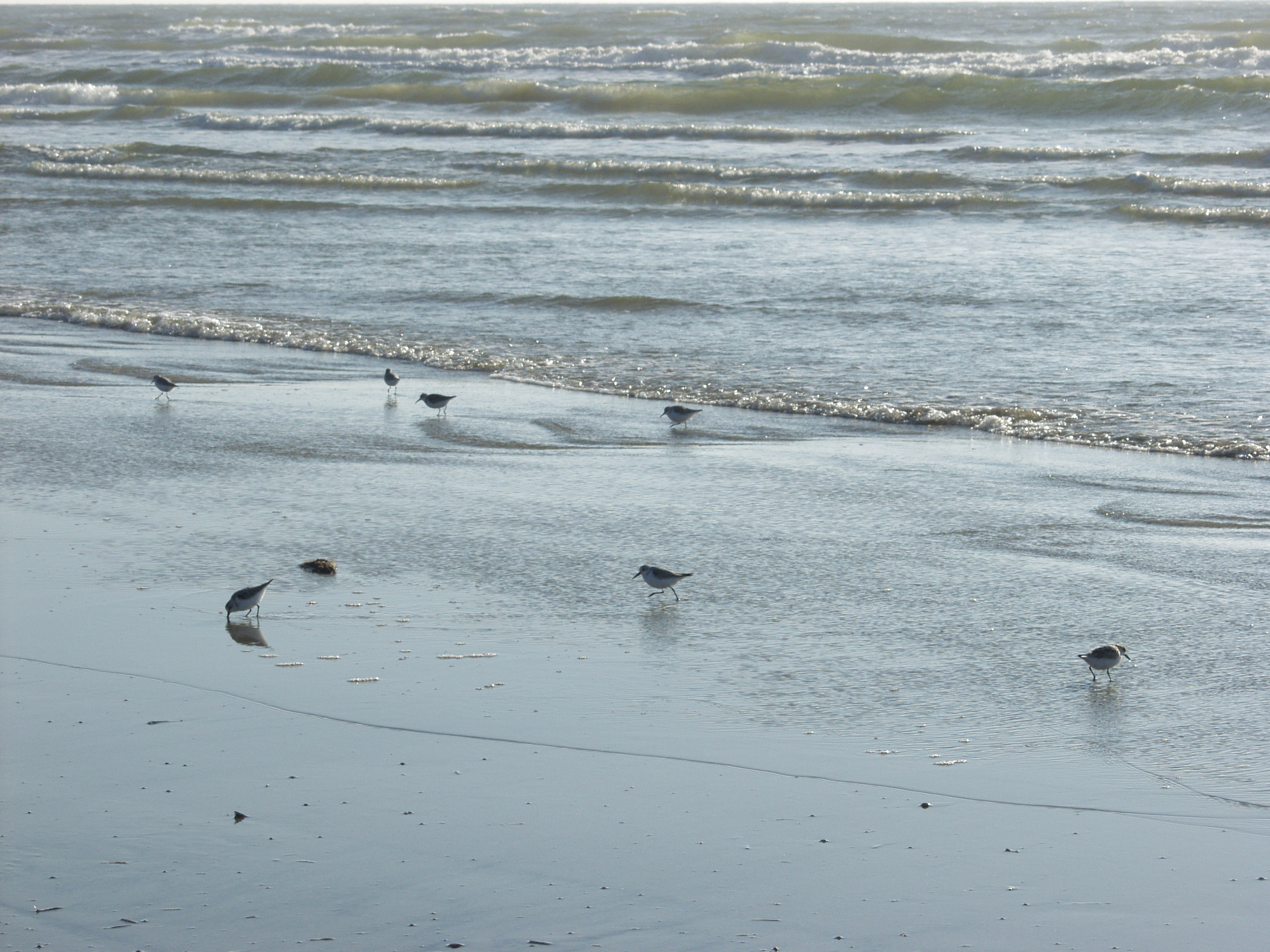
Also other migration birds like sandpipers (especially knots) and barnacle geese make beautiful sights.

The Wadden Sea is one of the world’s most important feeding grounds for migratory birds. Here birds congregate by 10 to 12 million to feed and increase their weight – some twofold – before continuing to their breeding grounds in the North or to their winter quarters South. No other place in Denmark has as many birds during the spring and fall migrations.
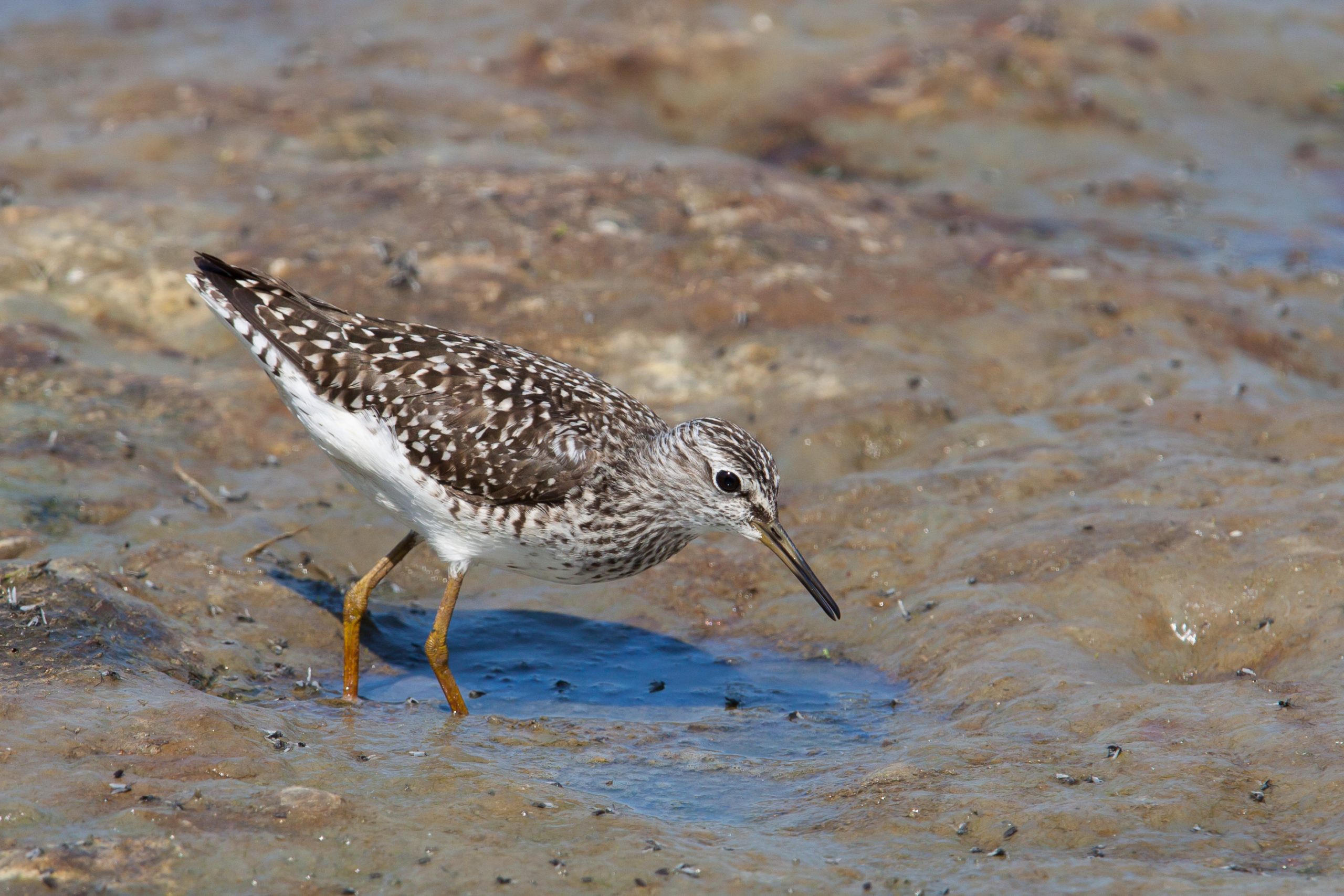
Wading birds primarily eat snails, mussels and worms, and their different beak lengths mean they find different food.
Short beaked birds such as sandpipers, plovers and redshank take mud snails and mud shrimps off the surface, while long beaked birds such as godwits and curlews can find mussels and sandworms deeper in the sand. The Oystercatcher take care of the common cockles and the common mussels, which it is expert at opening with a quick attack on the hinge muscle or by crushing the shell. During high water the mussel banks are left to the eider ducks. Ducks primarily eat the many mud snails, mud shrimps and other things off the surface of the water, and some ducks supplement their diet with the many plants that grow in the marsh.
The Wadden Sea National Park also provides food for several breeding and wintering birds.
A ranger from the Wadden Sea Visitor Centre tells about oyster safari in the Wadden Sea. Let the ranger show you, what you can experience of tastes, sounds, colours and sights in this video of a Oyster Tour.
Go oyster hunting
During recent years Pacific oysters have been found in the Wadden Sea. They spread very quickly, and there is concern they will outcompete native mussels, and disrupt the food chain that oysters catchers, eider ducks and herring gulls depend on. The pacific oyster’s only natural enemies are humans with a taste for delicacies, because birds are unable to open their thick shells. Pacific oysters often grow twice as large as common mussels, and there are already many tons of them in the Wadden Sea. These oysters should not be able to reproduce at our latitude, as they require a temperature of 20 degrees to thrive. Oysters and Mussels can be collected from October till May, as they are only eaten during the cool months, because oysters found in warm water can have dangerous bacteria – There is an old saying to eat oysters only in months that are spelled using the letter “R”.
You can pick your own oysters in the Wadden Sea National Park. The oysters are very delicious and those you don’t eat can be kept fresh in the hostel’s refrigerator if you stay at Danhostel Ribe. As said before, the oyster season runs from October to March, but don’t try to wander to the oyster beds yourself. To reach the beds you have to wade 3km out into the cold water, and that is dangerous because of the tides. Tours are arranged with nature guides from the Wadden Sea Centre (Vadehavscentret ved Ribe). The tours are strenuous and not for children. However, other oyster tours suitable for all ages are arranged as well as group excursions.
You can also go oyster picking with Mandø Event, a horse-drawn carriage from the Wadden Sea island Mandø, or with a guide from Naturcenter Tønnisgård on the Wadden Sea island Rømø.
Mussel tours are also performed.
Here is what Simon Calder from London Evening Standard said:
Swap the Oyster Card for an oyster breakfast – feasting on the freshest seafood beneath the vastest skies.
I joined Danish naturalist Klaus Melbye on a wintry wander across the North Sea shore to the oyster beds. It felt like walking on a watery moon, save for the flock of geese sweeping across the horizon. With one eye on the tide, we sifted through the seabed in search of oysters. He prised one open, cleaned it and drained the water. And there it was: with a bit of ice and a bit of sand, the bivalve became the freshest thing I have ever eaten.

The world’s biggest oyster and pearls in oysters
The world’s biggest oyster was found in the Wadden Sea National Park about 10 km from Ribe a couple of years ago. It was recognized by Guinness World Records.
Some oyster hunters find pearls in the oysters they collect in the Wadden Sea. One oyster collector found 30 small pearls in one oyster on a tour with Mando Event.
Seal watching trips in Denmark on a horse-drawn carriage from Mandø to the seal banks in the UNESCO Wadden Sea World Heritage
Seals in the Wadden Sea. Seal tours – Seal Safari in the Wadden Sea
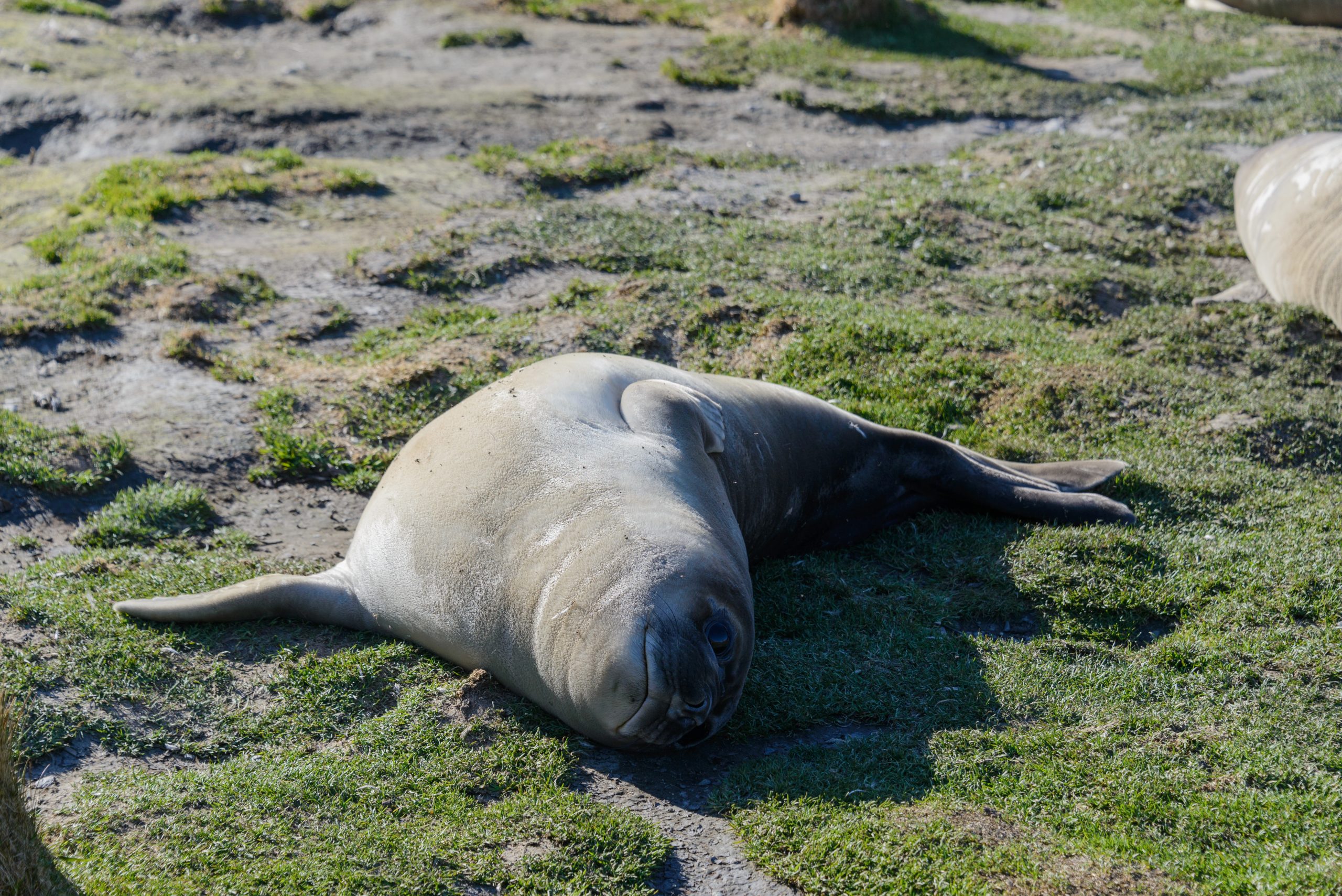
The Wadden Sea has Denmark’s largest population of common seals (harbour seals). Also a few grey seals can be seen. In 1015 about 40,000 harbor seals and 4,000 grey seals were counted in the entire Wadden Sea – Denmark, Germany and the Netherlands.
In 1988 and 2002 two major virus epidemics among seals in the Wadden Sea wiped out 50-60% of the population. Since then the population has grown again, and in 2015 was the largest number counted since seal censuses were organized in 1981.
The seals in the Wadden Sea is totally protected and now the stock of harbour seals (common seals) has increased so much that it is debatable whether it has now become a threat to fish stocks in the Wadden Sea (seals primarily eat fish), or there will soon be another epidemic.
The seals can be seen resting on offshore sandbanks. As many as 800 seals can be assembled. The sandbanks around the Wadden Sea island Mando is the Wadden Sea’s most important place for seals.
We recommend the seal tours “Seal Safari” with the well-educated nature guides from the Wadden Sea Centre (Vadehavscentret ved Ribe) to Mando’s offshore sandbanks where you can observe the seals at low tide without disturbing their breeding period or their natural habitat. The tours take place from early July to late October. The tour starts with an introduction about the seals at the Wadden Sea Centre’s nature school, then the Mando tractorbus takes the participants to the dike at Mando. From here you walk around 2.5 km along the dike and across the seabed to approx. 300 m away from the seals. With the brought telescope binoculars you get “up close” on the seals. All participants must be able to walk 6 km effortlessly.
Alternatively you have the option to go with a one of the local Mando islander tour operators, Mandø Event, on a horse-drawn carriage to the seal banks
At the Fisheries and Maritime Museum in Esbjerg, you can see seals cavorting in the sealarium and through big underwater windows you can watch the seals in their natural element. At 11am and 2.30pm will the Museum’s employees train and feed the seals
Explore the seabed on a low tide tour
It is a pleasure to walk barefoot through the mud flats during low tide a summer day looking for shrimps, worms, mussels, birds, seals and much more. You can join a guided Sea Explorer tour with guide from the Wadden Sea Centre, or you can rent a Wadden Sea handcart with fishing equipment, binoculars and an activity map for children. The children can play in and learn about the Wadden Sea at the same time. Be careful. You should only be on the tidal flats close to land 2 hours either side of the low tide.
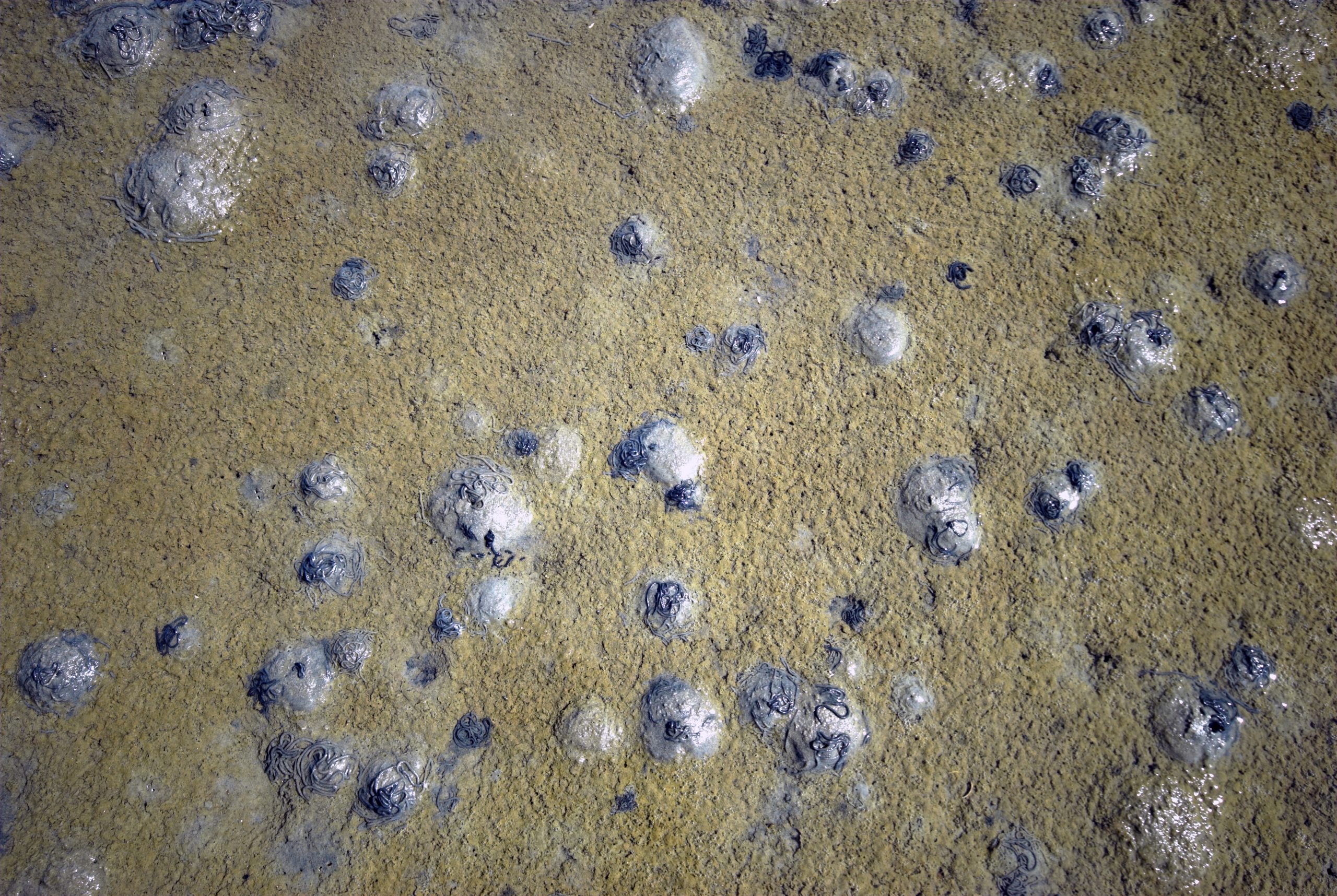
Lug worms, mud shrimps, common periwinkles, mud snails, sand gapers, common shrimps, common mussels and common cockles can be seen during low tide. Microscopic algae and plankton is the reason for the Wadden Sea’s enormous population of lower life forms, because they transform inorganic materials to organic particles.
Sheep and lambs at the dike, Kammerslusen. Local food made from Wadden Sea lambs is famous because of its delicious taste, which comes from eating salty marsh grass
Kammerslusen (Ribe Pound Lock), Ribe (7km)
Kammerslusen is a favorite recreational area for many Ribe citizens.
The Ribe River flows through Ribe town – passes the hostel – and has its outflow at the pound lock “Kammerslusen” at the Ribe Dike along the Wadden Sea. The pound lock has a chamber (=kammer in Danish =the pound) with gates at both ends that automatically close when high tide and open again at low tide.
If we have high water in the Wadden Sea over a longer period, the gates do not open, and therefore water accumulates in the river and starts to spread out across the marshes – all the way to Ribe.
At such times – often a large part of the winter – you will see water on both sides of main road A11 around Ribe. On the Ribe side of the road, the water reaches the bank around the hostel (Danhostel Ribe) and gives the hostel guests a “sea view”. See more photos and read more: Storm surges.
Boats and small ships can still get through Kammerslusen when it is closed, because the boat is locked in between the 2 locks before the next lock opens. However, this requires that you get hold of the lock operator, as this work takes place manually.
With tractor buss over the seabed to the small Wadden Sea island Mandø (Mando) not far from Ribe in Denmark
Wadden Sea island Mandø – UNESCO World Heritage
Take a tour over the seabed to the small Wadden Sea island Mandø (Mando).
It is a fantastic nature experience to drive across the bottom of the sea and study nature and animal life. The tour takes approximately 3/4 of an hour with one of the Mandø tractor busses from Vester Vedsted (10 km from the hostel) – both companies have tractors that draw a “bus” with passengers through the Wadden Sea.
Two of Denmark’s most remarkable roads, Låningsvejen and Mandø Ebbevej, go from Vester Vedsted to Mandø Island. Both roads are submerged by the tide twice daily. Låningsvejen is open to the public, if you know the tide, and know when the tide is out. Ebbevejen may only be used by the Mandø Island busses, which transports mail, students and tourists to and from the island. The Mandø Island bus schedule is also controlled by the tides. The schedules can be seen on the noticeboards at the hostel
Rømø Island (35 km) – UNESCO World Heritage
The Wadden Sea island by the North Sea in Southern Denmark has the widest beach in Scandinavia.
Romo island is famous for its exceptionally wide white beaches, which are up to 2km wide. In fact its narrowest point is still almost 700m wide. So why not go spend an enjoyable sunny day on the beach. It is often possible to drive a car right down to the water’s edge.
Plants in the Wadden Sea
Plants such as common sea-lavenders, glassworts, and sea plantains grow in the beach meadows and tolerate being flooded by salt water. Glassworts are usually the first plants to grow in the marsh, and Common Cordgrass become dominant in subsequent years. It was imported from England for its ability to bind and hold the sand.
The Tidal Area
Ebb and flood alternate along the Wadden Sea coast.
Every 24 hours there are 2 floods and two ebb tides, at six hours intervals. The reason for the variations in water depth is the moons gravitational pull. The moon is smaller than the earth, and the earth’s gravity cause the moon to revolve around the earth. But the moon’s gravity is strong enough to influence the liquid part of the earth’s surface, the ocean.
About one third of the Danish Wadden Sea is submerged at low tide, while two thirds are exposed. The tide moves 1 billion cubic meters of water back and forth over the salt march.
During low tide an immense amount of food is exposed to birds, and they take advantage of this bounty.

The marsh
The marsh is land deposited by the ocean. Its composition is particles of the oceans living organisms, fine grained sand and clay. It is called silt.
Because the silt deposited during each tide is so fine, the deposit left each year is only 1-2 cm thick.
Fences made of two rows of poles about a half-meter apart, and filled with branches, have been built out from the coast to gain land and to encourage silting. The water easily passes through these fences at high and low tide, but each time a little silt is left behind.
When the deposits reach a certain level it becomes economically feasible to dike the land so it doesn’t flood. A number of fresh-water plants begin to grow, but the soil is still very wet and is mostly used for grazing sheep and cattle.
In recent years preservation has become important, and the silt farms are only used for maintenance and to preserve the coastline in a few places, like along Låningsvejen to Mandø.
Visit the Wadden Sea Centre (Vadehavscentret)
Your visit to the Wadden Sea National Park could start at the Wadden Sea Centre (Vadehavscentret). The visitor Centre contains displays about the Wadden Sea, hands-on activities, video about Black Sun and a multi-media show about storm surges in the National Park. The displays are informative for all age groups.
If you want to learn more about the Wadden Sea Centre: Museums and Activity Centres in Ribe and the centre´s own homepage: The Wadden Sea Centre